Nozzle condition
Capture the nozzle check before the run, after the run and following a defined idle period. Missing or deflected nozzles can appear as banding or color drift.
Record: check pattern · cleaning event · idle duration
Model-specific evidence center
Printhead behavior, ink chemistry, waveform control, media transport and cure or drying form a system. This page shows how to evaluate that system without converting model-dependent specifications into universal promises.
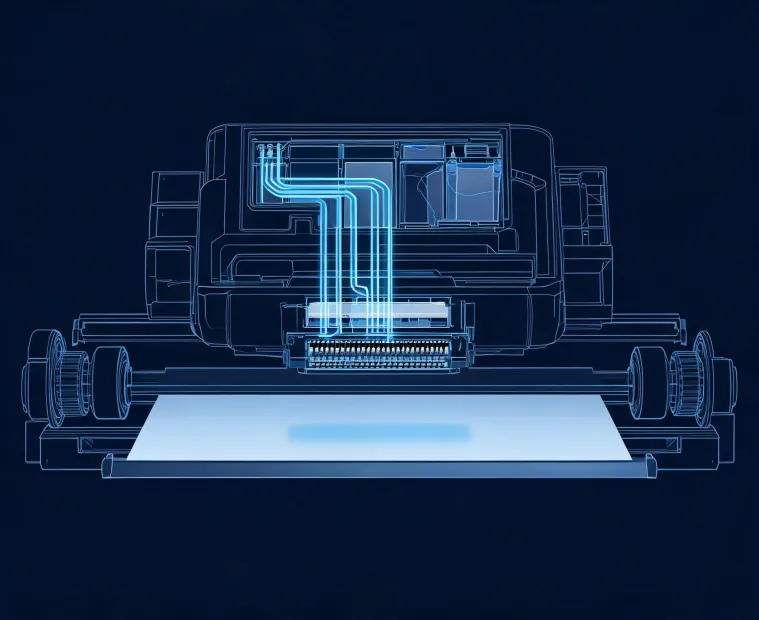
Four controlled variables
The values below are test fields, not published specifications. Record the actual model, mode and conditions beside every result.
Capture the nozzle check before the run, after the run and following a defined idle period. Missing or deflected nozzles can appear as banding or color drift.
Document ink set, white-ink routine, total ink limit and the profile used. More ink is not automatically better; excessive laydown can affect cure, hand feel or adhesion.
Evaluate platen loading, roll tension, vacuum or fixture behavior with the real substrate. Skew, head strike and placement variation may be material- or setup-dependent.
Log heat, time, UV exposure, drying interval, lamination or transfer conditions. The printed image is only an intermediate result when finishing determines acceptance.
Evidence package
Availability differs by printer, ink set and region. Treat the current model datasheet and local safety or compliance documents as controlling sources.
Print method, supported configurations, media limits, utilities and operating conditions for the exact model.
Storage, handling, environmental and regional information for the specified ink or consumable system.
Media identity, profile version, print mode and any pretreatment, cure or finishing conditions used for the approved sample.
Operator tasks, cleaning triggers, planned service, spare-consumable path and regional support boundary.
Reproducible method
Record printer model, firmware or software revision where relevant, ink set, media, profile, print mode and finishing equipment.
Condition media and ink according to current documentation. Log room temperature and humidity when they can affect transport, drying or jetting.
Document nozzle condition, loading, platen or roll setup, head clearance and the selected recipe before printing the agreed target.
Apply the defined press, cure, dry, laminate or cut process. Do not compare samples finished under unknown or inconsistent conditions.
Use the agreed visual tolerance and physical test, such as wash, rub or adhesion screening. Record both passing and failing observations.
Repeat the test after an idle period, operator change or new material lot. This exposes maintenance and process sensitivity that a single demo cannot show.
Model-specific review
Share the printer family, ink route, material and end-use test. The review will separate published model information from application assumptions and identify what still needs a physical sample.