Application engineering sequence

Epson Print Workflow Services Begin with the Acceptance Test

A productive evaluation describes the substrate, image type, finish, shift pattern and reject threshold before equipment enters the conversation. This guided path helps print teams translate those facts into a controlled sample plan.

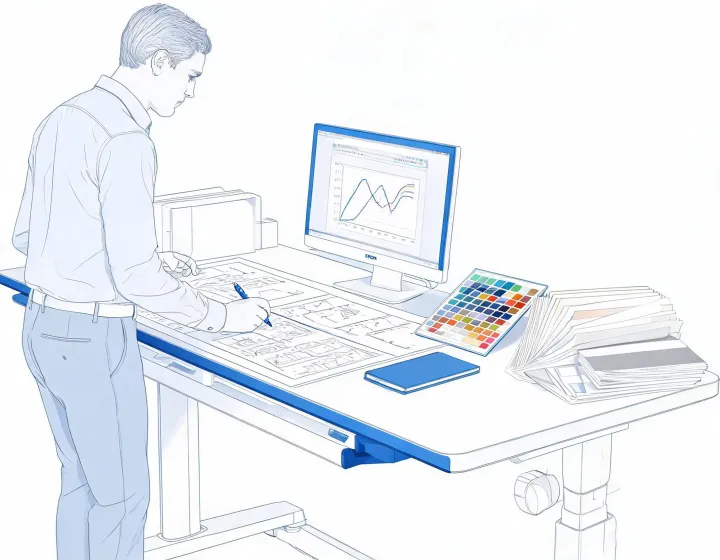
Application engineer preparing a commercial print test plan

Two Workstreams, One Traceable Handoff

The technical file and the operating routine are developed together so the approved sample is not separated from the conditions that produced it.

WORKSTREAM 01

Application and Media Qualification

Provide the actual garment, film, rigid board, transfer paper or roll media. The test brief records material source, coating or pretreatment, environmental conditioning, artwork characteristics and required finish. A sample without those details may look persuasive yet be impossible to reproduce later.

  • Substrate identity and storage condition
  • Ink set and print-mode checkpoint
  • Color target and inspection lighting
  • Adhesion, wash, rub or finishing test
WORKSTREAM 02

Production Readiness and Operator Transfer

The approved recipe is translated into start-up, loading, nozzle-check, cleaning and escalation steps. Actual staffing, idle periods and finishing capacity belong in the review because rated print speed does not equal sellable daily output.

  • Shift start and shutdown routine
  • Consumable and maintenance ownership
  • Approved profile and recipe archive
  • First-article and rerun sign-off

Questions worth settling early

Where Evaluations Commonly Diverge

These are decision trade-offs, not universal rules. The correct answer changes with the material, order mix and finishing path.

Peak carriage speed can improve one portion of the workflow, while curing, transfer, loading or inspection becomes the limiting step. Compare sellable output over a representative shift and record the print mode used.

A profile is linked to ink, media, mode and measurement conditions. Similar-looking materials can differ in absorption, surface energy or coating. Validate each production-critical combination and preserve the approved settings.

It should prove a defined requirement: visual tolerance, adhesion, wash response, finishing compatibility or repeatability. A visually attractive image made on unknown media under undocumented settings is not a transferable production result.

From Demo Impression to Production Evidence

BEFORE

An incomplete request

“We need a fast printer for apparel.” No garment type, artwork mix, wash requirement, staffing assumption, transfer method or expected order profile is defined. Any recommendation must fill the gaps with guesses.

AFTER

A testable application brief

“Qualify dark cotton and polyester blends using supplied artwork; document pretreatment or film/powder set, curing method, wash protocol, average operator touches and sellable pieces per four-hour run.” The comparison now has a repeatable method.

Start with your constraint

Build a Focused Epson Test Brief

Send the actual substrate, expected monthly range, finishing path and acceptance rule. Model availability and published specifications vary by region, so the response will keep model-specific claims tied to current documentation.